What types of sensors are commonly used in closed-loop motion control systems?
Discover the key sensors used in closed-loop motion control systems and their roles in enhancing precision and performance.

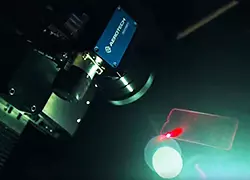
A case study examining display production that optimizes quality and throughput – and lower total cost.
3 min read
In the world of industrial automation, a control system’s architecture dictates the reliability and accuracy of the entire operation. Whether you are designing a semiconductor wafer inspection tool or a high-speed packaging machine, the fundamental choice between open- and closed-loop architectures is the first decision an engineer must make. While precision motion control is often associated with the highest tiers of performance, understanding the basic mechanics of how a system receives and acts on commands is critical for optimizing any application.
For engineers focused on motion controller programming, the distinction is not just academic – it defines the code you write and the hardware you select. Does your system blindly follow a schedule, or does it intelligently adapt to its environment? This article explores the definitions, operational differences and performance trade-offs of these two essential control strategies.
The primary distinction between an open-loop and closed-loop system lies in the presence or absence of feedback.
In an open-loop system, the controller sends a command to an actuator (such as a motor) and assumes the command has been executed successfully. There is no mechanism to verify the actual output. The system relies entirely on a pre-calculated model or calibration to predict the outcome. If the physical parameters of the system change – for example, if a load becomes heavier or friction increases – the system cannot adapt, and the output will deviate from the target.
Conversely, a closed-loop system is defined by its ability to "close the loop" between input and output. Unlike open-loop systems that send commands without verification, closed-loop systems continuously monitor the actual output using sensors and compare it to the desired input. This comparison generates an error signal, which the controller uses to make real-time adjustments. This feedback mechanism is essential for correcting errors and ensuring the system reaches its target state, regardless of external disturbances or "plant unknowns."
Open-loop control is best understood through systems that operate on a simple "set and forget" basis. These systems are characterized by their simplicity and lower cost, as they do not require expensive feedback sensors or complex processing algorithms.
A classic industrial example is a basic stepper motor application without an encoder. In this scenario, the controller sends a specific number of electrical pulses to the motor, expecting it to rotate a precise number of degrees for each pulse. If the motor is sized correctly and the load remains constant, this works well. However, if the machine encounters a mechanical jam or an unexpected load spike, the motor may "lose steps" (physically slip) without the controller ever knowing. The machine could continue to run the rest of its program from the wrong position, potentially damaging parts or the machine itself. Or, if appropriately configured in the controller, the jam would create a current spike to the motor, throwing a fault in the controller and requiring the machine to be cleared and restarted.
Common everyday examples include a toaster or a sprinkler system. A toaster operates on a timer (open loop); it does not measure the actual brownness of the bread (closed loop). It assumes that heating for a set time will produce the desired result, regardless of whether the bread was frozen or fresh.
When precision is non-negotiable, engineers turn to closed-loop architectures. A prime example is a servo motion system used in semiconductor manufacturing or aerospace navigation.
In a high-precision positioning stage, a linear encoder continuously measures the exact position of the payload. If the controller commands the stage to move to a position of 100mm but the encoder reports it is at 99.999 mm (due to friction or cable drag or mechanical inaccuracies), the controller instantly detects this 0.001 mm error. The controller then adjusts the current to the motor to push the stage that final micron.
There are different types of closed-loop control system configurations depending on the variable being controlled. For instance, a system might use a velocity loop to maintain constant speed, a position loop for geometric accuracy or a force loop to maintain constant pressure on a delicate component. The industry standard for managing these loops is the Proportional-Integral-Derivative (PID) controller, which uses complex math to predict and eliminate errors.
Comparing an open-loop and closed-loop system ultimately comes down to a trade-off between cost/simplicity and accuracy/reliability.
Performance of Open-Loop Systems
Performance of Closed-Loop Systems
In scenarios where safety and error tolerance are critical, such as medical devices or high-speed automation, the self-correcting nature of a closed-loop system is essential.
Ready to dive deeper into the world of precision motion controls?
