What specific industries benefit the most from using motion control PLCs?
Discover which industries gain the most from motion control PLCs and how they enhance efficiency and precision in automation.

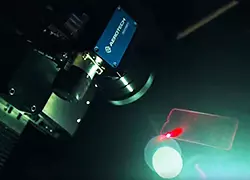
A case study examining display production that optimizes quality and throughput – and lower total cost.
6 min read
In the high-stakes arena of industrial automation, the architecture of your control system is the invisible force that dictates the speed, accuracy and reliability of your entire operation. However, as modern manufacturing demands tighter tolerances and faster throughput, the line between traditional logic control and high-performance precision motion control has blurred.
Today, the motion control PLC represents a critical evolution in this technology stack. It bridges the gap between the binary world of "on/off" logic and the continuous, dynamic world of servo mechanics. For engineers and machine builders, understanding how to leverage this technology – or when to bypass it for a dedicated motion controller – is the key to unlocking your machinery’s full potential. Whether you are synchronizing a multi-axis gantry or simply indexing a conveyor, the "brain" you choose will define your machine's capabilities.
PLC motion control refers to the use of a Programmable Logic Controller to manage the position, velocity, and torque of electromechanical actuators. Unlike standard PLC operations that handle simple discrete I/O (like reading a limit switch or turning on a light), motion control involves complex calculations to drive motors along a specific path or "trajectory."
In a typical setup, the PLC acts as the overarching manager. It executes the main machine program, monitors safety interlocks and sends commands to the drives. The actual motion profile – the math that determines exactly how the motor accelerates and decelerates – is often handled by specific PLC module types designed for motion or offloaded to intelligent drives via a fieldbus.
The components involved in a PLC motion control system typically include:
Main CPU: The processor that runs the logic program (Ladder Logic or Structured Text).
Motion Modules: Specialized cards plugged into the PLC rack that handle high-speed pulse generation or axis coordination .
Servo Drives and Motors: The muscle of the system that executes the movement.
Feedback Devices: Encoders or resolvers that close the loop, telling the PLC exactly where the load is.
This integration allows for a unified platform where a single software environment manages both the machine logic and the motion sequence.
While a PLC can perform motion tasks, a motion controller in PLC is often a distinct subsystem or a specialized processor dedicated solely to the physics of movement. In high-performance automation, the "motion controller" is the brain that lives within or alongside the PLC to handle the heavy lifting of trajectory generation.
The primary role of a motion controller is to calculate the motion path – often thousands of times per second – to ensure smooth movement without vibration or overshoot. This functionality differentiates it from a standard PLC in several key ways :
By segregating these tasks, the motion controller ensures that the complex math of moving a load doesn't bog down the PLC's ability to monitor sensors and manage the rest of the machine.
While PLCs have become more capable, there is a distinct threshold where a dedicated motion controller becomes the superior choice. This divide usually comes down to speed, synchronization and mathematical complexity.
Different types of PLCs used in industry are excellent for sequential tasks – assembly lines, packaging and palletizing – where motion is point-to-point and independent. However, motion controllers are preferred in:
CNC Machining: Cutting complex shapes requires "interpolation," where multiple axes move in perfect unison to create a circle or spline. A standard PLC struggles to calculate these paths in real-time.
Semiconductor Manufacturing: This industry requires nanometer-level precision and vibration suppression. Dedicated motion controllers use advanced control techniques (like active vibration isolation and MIMO control) to minimize mechanical resonances/coupling that a PLC cannot see or correct.
Robotics: Controlling a six-axis robot arm requires "inverse kinematics" – calculating the angle of every joint to get the tool tip to a specific point in space. This requires matrix algebra capabilities that exceed standard PLC functions.
Laser Processing: Applications requiring laser pulses to be coordinated with the measured motion of a part or tool to the nanosecond level.
In modern "hybrid" architectures, the PLC and motion controller must act as a single cohesive unit. Their communication is the nervous system of the machine, and its speed determines the system's responsiveness.
They communicate primarily through high-speed industrial fieldbuses:
EtherNet/IP®: This protocol integrates motion and standard data on the same wire, often using "CIP Motion" profiles to synchronize drives.
Profinet IRT: Offers Isochronous Real-Time (IRT) communication for hard synchronization.
This integration is critical. The PLC handles the "state machine" (e.g., Idle, Run, Error), while the motion controller executes the "move" commands.
The divide between PLCs and motion controllers is perhaps most visible in how engineers talk to them. The "language" of the PLC is logic; the language of the motion controller is geometry and physics.
PLC Programming:
Ladder Logic (LLD): The industry standard for PLC programming. It visually resembles electrical relay diagrams, making it intuitive for electricians and maintenance staff to troubleshoot "why a motor didn't turn on."
Sequential Function Chart (SFC): Used for managing the step-by-step flow of a machine's state.
Motion Controller Programming:
Structured Text (ST) / C / C++: Motion tasks often involve complex math equations that are clumsy in Ladder Logic. Text-based languages allow engineers to write algorithms and loops efficiently.
G-Code (RS-274): The standard for CNC. It describes geometry (e.g., "G01 X10 Y10" means "move in a straight line to coordinate 10,10").
Proprietary Scripts: High-end motion controllers often use their own scripting languages (like Aerotech's AeroScript™) to expose powerful features like high bandwidth force control loops or laser firing based on position, which standard PLC languages lack.
While PLCs prioritize ease of maintenance and readability, motion controllers prioritize flexibility and mathematical power.
The "Motion-Enabled PLC" or "Hybrid Controller" attempts to offer the best of both worlds: the simplicity of a PLC with the capability of a motion controller.
Advantages include:
Unified Development Environment: You program the logic and the motion in the same software. This eliminates the need to manage two separate codebases and the complex handshaking between them.
Reduced Wiring and Hardware: Merging the two devices reduces cabinet space and points of failure. There is no "lag" between the logic decision and the motion execution because they happen on the same processor.
Cost-Effectiveness: For mid-range applications, buying one device is often cheaper than buying two separate specialized ones.
Modern Innovations: This integration is being accelerated by tools like PLC GPT and PLC copilot assistants. These emerging AI tools can help engineers generate the complex code required for motion tasks within a PLC environment. Instead of manually writing the code to coordinate three axes, an engineer might ask a PLC copilot to "generate a function block for a three-axis interpolated move," significantly lowering the barrier to entry for complex motion control.
While PLCs are catching up, there are specific arenas where the dedicated motion control PLC architecture cannot compete with a pure-play motion controller. These include:
Laser Micro-Machining: When cutting stents or drilling micro-vias in PCBs, the laser pulses must be synchronized to the exact position of the moving stage, not time. If the stage slows down around a corner, the laser frequency must change instantly to prevent burning. Dedicated motion controllers with Position Synchronized Output (PSO) features handle this in hardware; a PLC simply cannot react fast enough.
High-Speed Packaging (Electronic Camming): High-speed packaging applications often require the low latency and precision of a dedicated motion controller, particularly in complex scenarios like form-fill-seal machines that must coordinate multiple cammed axes for film feeding, cutting and sealing. While standard PLCs are sufficient for simple, fixed-pace tasks like wrapping a uniform candy bar, motion controllers are superior when handling dynamic recipe changes or "on-the-fly" product adjustments.
Active Vibration Cancellation: In optical inspection, the stage moving the sample can induce vibrations in the microscope frame. A high-end motion controller can use feedforward and MIMO control techniques to move a secondary "counter-mass" in the opposite direction to cancel it out in real-time.
In these cases, the "motion control" aspect is not just about moving; it is about the physics of the process itself.
When selecting hardware for your motion control PLC system, it is vital to understand the form factor that best fits your machine. The industry generally categorizes PLCs into three main types based on their physical architecture:
Unitary (Compact/Fixed) PLCs: These are "all-in-one" bricks. The power supply, CPU and I/O are built into a single housing.
Suitability: Ideal for small machines with fixed requirements. They are cost-effective but offer limited expandability. If you need four axes of motion and the unit only supports two, you typically have to replace the whole unit.
Modular PLCs: These systems use a "backplane" or rack. You buy the CPU card, the power supply and the I/O cards separately and plug them together.
Suitability: The standard for most industrial automation. They allow you to mix and match PLC module types. You can add a specific "Motion Control Module" next to a "Temperature Input Module," tailoring the system exactly to your needs. This scalability makes them perfect for growing or changing production lines.
Rack-Mounted PLCs: Similar to modular but designed for larger scale, high-density applications. The cards are mounted vertically in a dedicated rack chassis which handles the communication bus.
Suitability: Used in large process plants or complex machines with thousands of I/O points. They offer the highest robustness and often support "hot-swapping" (replacing a module while the machine is running).
Ready to dive deeper into the world of precision motion controls?
