How do different communication protocols like EtherCAT® impact system performance?
Explore how communication protocols like EtherCAT influence system performance and efficiency in automation.

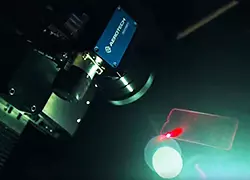
A case study examining display production that optimizes quality and throughput – and lower total cost.
3 min read
In the modern industrial landscape, the integration of logic processing and physical movement is increasingly common. For decades, the Programmable Logic Controller (PLC sub link) has served as a foundational element of factory automation, executing sequential tasks and managing Input/Output (I/O) with reliability. As manufacturing requirements evolve to include higher throughput and tighter tolerances, the incorporation of precision motion control into the PLC environment has become a key consideration for system architects.
For engineers navigating the nuances of motion controller programming , understanding the operational differences between a PLC handling motion and a dedicated motion controller is essential for selecting the appropriate system architecture. Whether an application involves standard point-to-point positioning or requires complex, nanometer-level synchronization, the specific technical requirements will determine if a specialized motion controller or a PLC with integrated motion capabilities is the optimal solution. This article explores the mechanics, applications and strategic considerations of implementing motion control within a PLC ecosystem.
Motion control in PLC refers to the capability of a Programmable Logic Controller to manage the position, velocity and torque of servo or stepper motors alongside its traditional logic duties. Rather than just turning a motor on or off (like a conveyor belt), motion control involves calculating precise trajectories to move a load from one specific point to another with defined acceleration and deceleration profiles.
In a typical setup, the PLC acts as the central command unit. It processes sensor feedback and sends commands to servo drives, which in turn power the motors. The basic components involved include:
The Controller (CPU): Executes the logic and motion instructions.
Motion Modules: Specialized hardware cards that handle high-speed pulse generation or fieldbus communication.
Drives and Motors: The physical actuators moving the load.
Feedback Devices: Encoders that report position back to the controller.
This architecture is ubiquitous in industries like packaging, bottling and general assembly. For smaller, standalone machines with limited space, a Compact PLC – an all-in-one unit combining the power supply, CPU and I/O – is often used to handle simple motion tasks like indexing a rotary table or driving a linear actuator for labeling.
While a PLC can do motion, it is distinct from a dedicated "motion controller." The fundamental difference lies in their operational focus: PLCs are event-based, while motion controllers are time-based.
PLCs (Logic-Focused): Originally designed to replace relay logic, PLCs excel at discrete event control (e.g., "if sensor A is blocked, stop conveyor B"). They operate on a scan cycle that can vary in time, which is acceptable for logic but can introduce jitter in motion profiles.
Motion Controllers (Physics-Focused): These are specialized computers designed to close high-speed servo loops (often >1 kHz). They use complex mathematical engines to calculate trajectories, such as cubic splines or helices, and ensure tight synchronization between multiple axes. They operate on a strictly deterministic clock to prevent vibration and overshoot.
Determining the appropriate control architecture involves evaluating the mechanical requirements of the application against the capabilities of the available hardware. While PLCs are standard for general automation, dedicated motion controllers provide distinct advantages when the application prioritizes the physics of movement over discrete logic.
Complexity of Motion: If the project requires complex mathematical functions such as electronic camming, gearing or multi-axis interpolation (e.g., coordinating X and Y axes to generate a circle), a dedicated motion controller is the optimal choice. These devices are specifically architected to calculate trajectories and handle complex kinematics that can tax the processing resources of a standard logic controller.
Speed and Synchronization: When application loop times must remain under 1 millisecond with low jitter, the deterministic nature of a dedicated motion controller offers superior performance. Unlike scan-based logic controllers where cycle times can vary, motion controllers operate on strict time-based updates, ensuring consistent and smooth motion profiles.
Scalability: For large systems requiring significant discrete I/O, a Modular PLC architecture is effective, allowing specific motion modules to be slotted alongside standard I/O cards. However, for systems where the motion count or complexity scales, a dedicated motion controller is often preferred to ensure that the quality of the trajectory generation is maintained regardless of the I/O load.
In many advanced applications, a hybrid architecture offers the best performance. In this setup, a PLC manages the overall machine state and safety, while a dedicated motion controller handles the high-speed servo loops locally. This allows the system to leverage the specialized computational power of the motion controller for precision tasks without burdening the central logic processor.
When a project necessitates using both a PLC and a separate motion controller, integration becomes the primary hurdle.
Communication Latency: Getting the two systems to talk in real-time can be difficult. If the PLC sends a "start" signal, the delay before the motion controller acts must be minimized. High-speed fieldbuses like EtherCAT® are standard solutions here, processing data "on-the-fly" to ensure synchronization.
Data Mapping: Ensuring that the "floating point" position data in the motion controller matches the data registers in the PLC often requires complex mapping and can lead to programming errors.
Programming Complexity: Maintaining two separate codebases – Ladder Logic for the PLC and Structured Text or G-Code for the motion controller – increases development time. Modern "Hybrid Controllers" attempt to solve this by offering a unified programming environment (IEC 61131-3) for both logic and motion.
Ready to dive deeper into the world of precision motion controls?
