What are the differences between hexapods and stages, and how do you choose which one to use?
Discover the main differences between hexapods and stages, plus expert tips on selecting the right motion system for your application.

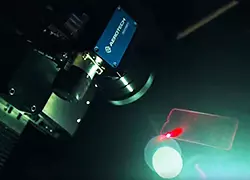
A case study examining display production that optimizes quality and throughput – and lower total cost.
3 min read
When standard industrial robotics hit their precision and flexibility limits, upgrading to a parallel-kinematic system is often the most effective path forward. A hexapod platform provides unparalleled six-degree-of-freedom (6-DOF) motion, replacing bulky legacy stages with a single, high-stiffness mechanism. However, successfully integrating a precision hexapod requires navigating a unique set of mechanical, software and communication hurdles. When exploring how to implement these advanced machines into your production line, R&D center or laboratory, understanding the challenges of precision hexapods is the first step toward achieving a seamless, highly profitable automation upgrade.
One of the most immediate hurdles engineers face during hexapod integration is understanding the machine’s physical workspace envelope. Hexapod workspace sizing is much more complicated than that of serial stages. Unlike a traditional stack of linear stages where X travel is completely independent of Y travel, the axes of a hexapod are mathematically and physically coupled.
As you move toward the limit of one axis – such as reaching maximum Z-height – the available travel in other rotational axes like pitch or yaw inherently decreases. Because of this, you cannot assume a standard, rectangular workspace. You must meticulously model the workspace envelope based on the hexapod’s specific kinematic properties. Fortunately, most leading hexapod suppliers offer highly accurate digital tools that allow for easy workspace sizing and estimation before deployment.
Beyond sizing, engineers face practical integration issues. In tight automation cells, the moving platform, struts or user payload may inadvertently collide with nearby structures or equipment, if not carefully managed. Using collision-avoidance simulation tools prior to installation is a good way to mitigate this risk, mapping out safe trajectories and preventing collisions or crashes during complex multi-axis motion profiles.
Selecting the perfect hexapod system requires evaluating fundamental motion criteria: exact load capacity, desired travel range, mechanical resolution and more. However, beyond these basics, one of the greatest challenges of precision hexapods is maintaining thermal and structural stability over time.
Because these systems often work at sub-micron levels, the hexapod itself can act as a localized heat source. In high-duty cycle automation, the six internal motors can generate enough heat to cause microscopic thermal expansion in the metal struts, shifting the precise alignment by several microns. For the highest precision, engineers must carefully manage the thermal properties of hexapods or other motion devices, ensuring that duty cycles aren’t so aggressive that they cause excessive internal heating.
Furthermore, engineers must consider the software setup, specifically defining the virtual pivot point. The biggest shift for engineers is moving away from physical centers of rotation. In an existing setup, the tool or optical fiber might not be perfectly centered on the hexapod top plate. The virtual pivot point offset must be programmed during operation. If the fiber tip is 50mm above the center, that offset must be defined so that all pitch and yaw commands rotate seamlessly around that tip. Without this critical step, the hexapod will swing the fiber completely out of view every time it attempts to make an alignment. A good hexapod supplier will have tools and documentation to help users easily understand and manage these virtual pivot points and rotation centers.
Establishing seamless communication between the hexapod controller and a factory automation system is a vital step in successful hexapod integration. Most hexapods come with dedicated controllers that handle the complex matrix math internally. While your main factory automation PLC likely speaks standard protocols like EtherCAT® or Profinet – or perhaps you’re using EPICS or TANGO if you’re a beamline scientist in a synchrotron facility – the hexapod controller might use its own proprietary command language. It is crucial to look for controllers that offer a direct fieldbus interface. This allows the factory automation to see the hexapod system as a single 6-DOF coordinate system. The user simply sends a command for X, Y and tilt, and the hexapod controller automatically translates that into the six individual motor movements.
Another vital consideration is synchronization with feedback sensors. For automated alignment, the hexapod must communicate constantly with a power meter or vision sensor. In these setups, latency is the enemy of speed. If the power meter is connected to a PC, and the PC must tell the PLC, which then tells the hexapod, the alignment process will be incredibly slow. For high-speed active alignment, the power meter output should be fed directly into the hexapod controller’s high-speed inputs.
Finally, do not overlook cabling and interference management. Even though the hexapod base is stationary, you need to ensure that the hexapod cables that connect it to its controller adhere to bend-radius requirements, so as not to overstress the cables and cause premature wear.
Overcoming the computational challenges of precision hexapods relies heavily on the processing power of the motion controller. Dedicated hexapod controllers act as the central brain of a hexapod system, explicitly built to handle highly complex matrix math and inverse kinematic transformations internally in microseconds.
To support this physical control, engineers rely on powerful digital tools provided by the manufacturer for workspace modeling, 3D collision simulation and intuitive virtual pivot point programming. These software ecosystems allow operators to test complex trajectories in a virtual environment before running the physical machine.
Additionally, achieving high-speed optical alignments relies on advanced alignment algorithms (like rapid gradient searches). Feeding sensor data directly into the hexapod’s dedicated hardware inputs allows these sophisticated algorithms to run at the lightning-fast servo loop level. This synthesis of elite computational software and high-speed hardware ensures that the hexapod delivers the ultimate precision and speed required for modern automation.
Ready to dive deeper into the world of hexapod products?
