6-DOF Hexapods
Discover how 6DOF hexapods deliver advanced motion control for robotics, automation, and engineering applications. Explore features, uses, and...

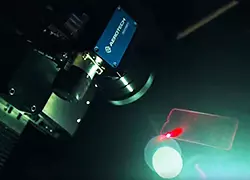
A case study examining display production that optimizes quality and throughput – and lower total cost.
5 min read
As technology scales down to the nanometer level and global manufacturing throughput demands increase exponentially, it is paramount to identify the optimal motion control architecture. Whether you are aligning delicate silicon photonics components or maneuvering massive optical components in a vacuum environment, standard motion stages are often pushed past their structural and geometric limits. Enter the precision hexapod—a premier, six-degree-of-freedom parallel kinematic positioner designed to mitigate complex alignment errors, conquer harsh operational environments and offer an alternative solution to modern motion control and manufacturing challenges. In this comprehensive guide, we will explore the foundational mechanics, advanced control algorithms and diverse applications of these dynamic motion platforms.
Precision positioning is the science and engineering of commanding a mechanical payload to a specific spatial coordinate with absolute minimal deviation from that intended target. An automation project's success is defined by time constraints like time to market, financial factors such as return on investment, and quality metrics like consistency and reliability.
Achieving high-accuracy movement requires overcoming severe physical and environmental challenges. A typical six-axis positioning system contains a staggering 36 total sources of kinematic error. These error sources include pitch, roll, yaw, straightness, flatness and linear deviations that actively compound as stages move through travel. In industries like Silicon Photonics (SiP), a spatial misalignment of only a few micrometers between optical components can result in final device power losses of 50% or more.
To satisfy the complex and demanding motion requirements of modern applications, precision hexapods use a highly robust, multi-axis parallel architecture. The core tradeoffs in motion control involve balancing precision, speed, size and cost. Parallel kinematic machines directly address these tradeoffs by replacing bulky, serially-stacked stages with a parallel-kinematic platform managed entirely by sophisticated kinematic controllers.
At first glance, a hexapod appears drastically different from standard linear or rotary positioning stages. A hexapod is a specialized parallel-kinematic device that uses six length-adjustable struts within a closed kinematic chain to position a moving platform in six degrees of freedom.
This physical structure eliminates the need to bolt individual, single-axis stages on top of one another. To help visualize a hexapod, you can imagine a mechanical stool where the legs expand and contract in perfect unison to tilt, twist and elevate the seat.
A hexapod’s primary structural components include the following:
The physical variations of a hexapod stage depend heavily on the final application. For hysteresis-free, high-precision applications with short travels, manufacturers sometimes use specialized flexure joints. Conversely, extreme-load hexapods used in large ground-based telescopes use specialized Cardan joints with axis offsets to handle massive loads without inducing singularity issues.
In conventional stacked multi-axis systems, if you want to rotate a payload, the center of rotation is permanently fixed by the rotary stage’s physical bearings. Changing that physical pivot point requires expensive redesigns and custom brackets.
A hexapod stage removes these mechanical limitations through a concept known as the "virtual pivot point." A virtual pivot point is a software-defined center of rotation that allows the user to rotate the platform around any arbitrary point in space. Because the machine is governed by a software matrix rather than hard mechanical brackets, a hexapod controller uses transformations to dynamically shift its rotational axes.
This principle is absolutely revolutionary for complex motion. For instance, in photonics, you can program the center of rotation to sit exactly at the physical tip of an optical fiber. When the algorithm commands a pitch or yaw adjustment to optimize the angle of the light, the tip of the fiber stays perfectly stationary in space while only the angle changes. This enables algorithms to optimize multiple rotational axes simultaneously without losing the critical optical signal.
When evaluating a precision hexapod, engineers must recognize how parallel kinematics exhibit different characteristics than traditional serial-kinematic systems. Serial kinematics involves stacking independent, single-axis positioning stages on top of one another. The bottom stages bear the mass of the entire stack, resulting in heavier loads on the motor and bearings. Furthermore, angular errors in a lower axis are mechanically amplified at the top of the stack, degrading overall precision.
Hexapods operate in a parallel-kinematic manner, using advanced mathematical models and structural benefits to offer a different balance of properties and performance compared to traditional stages:
High-accuracy stages depend on this mapping to meet extreme performance specifications. Considering the cost per axis and performance attributes of a hexapod compared to serially stacked stages, the long-term ROI often justifies the initial hexapod positioning system price.
The ability to dynamically manipulate a payload in X, Y, Z, pitch, roll and yaw simultaneously makes the precision hexapod an essential asset across the world’s most advanced industries.
Common applications and integrations include:
There are several different names used by various industries, academic circles and geographic regions to describe the exact same 6-DOF architecture:
Open-source robotics communities also experiment heavily with these architectures. While a casual search for a hexapod github repository might yield hobbyist walker-robots or basic control scripts, true industrial integration requires enterprise-class, compiled C-Transformation matrices. For mission-critical fab lines, an industrial-grade hexapod nanopositioner price accurately reflects the advanced metrology and compiled firmware required to achieve sub-micron stability.
A hexapod stage’s fundamental layout provides structural advantages that standard linear actuators simply cannot replicate.
In serial stacked systems, the bottom stage must carry the mass of all the stages and cables above it, drastically reducing the system's dynamic responsiveness. In multi-axis serial stacks, cables must be constantly dragged along by the moving axes. These dragged cables can act as conduits for vibration and cause parasitic off-axis motions that degrade precision.
Hexapods leverage parallel kinematics to eliminate these weaknesses entirely:
When evaluating hexapod price, engineers should consider the relative benefits and costs of both parallel-kinematic and traditional serial-kinematic architectures. For example, the Aerotech HEX300-210HL hexapod represents a premium hexapod solution with ultra-accuracy specifications. It boasts an incredible minimum step size of 15 nanometers and a massive 68 kg load capacity. Conversely, assemblies of single-axis stage actuators typically fail to provide this blend of extreme payload capacity, range of travel and precision in this specific combination because of their architectural limitations.
Ready to dive deeper into the world of hexapod products?
