Precision Hexapod
Discover how precision hexapods deliver unmatched accuracy and flexibility in six-degree-of-freedom motion control applications. Explore features,...

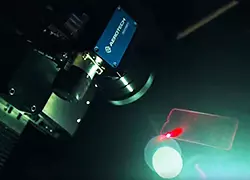
A case study examining display production that optimizes quality and throughput – and lower total cost.
3 min read
When engineers are tasked with aligning delicate optical fibers or manipulating sensitive aerospace components, traditional robotic stages sometimes fall short due to mechanical errors and rigidity issues. This is where advanced parallel-kinematic solutions like the 6-DOF hexapod enter the picture. As a cornerstone of modern automation, a precision hexapod provides an elegant yet incredibly powerful method for manipulating objects in three-dimensional space with sub-micron accuracy. This guide explores the fundamental mechanics and underlying control systems that drive them.
Hexapods are parallel-kinematic mechanical devices that generate controlled motion in six degrees of freedom (6-DOF). Often referred to as a Stewart platform, a hexapod works by using six independent, linear actuators (legs) connected in parallel between a fixed base and a moving top plate.
This specific design relies on parallel kinematics. Unlike serial kinematics, where individual motion stages are physically stacked on top of one another, a hexapod positioner mounts all of its dynamic components simultaneously. An Aerotech hexapod, for example, uses this parallel layout to generate complex spatial motion without the compounding mechanical errors inherent to traditional stacked-joint robotic arms.
The name "hexapod" fundamentally translates to “six feet” or "six legs," which directly corresponds to its movement capabilities. A hexapod provides a full six degrees of freedom (6-DOF). These include three linear axes (X, Y, and Z for forward/backward, left/right and up/down movement) and three angular axes (roll, pitch and yaw for rotational tilting).
By extending or retracting these legs in a coordinated manner, the top plate moves in all six degrees of freedom – 3 linear and 3 angular. The seamless combination of these six actuators allows for precise movement along any specific vector. Understanding this 6-DOF motion profile is vital, and referring to a precision hexapod manual can help operators safely program the machine for tasks requiring extreme positional flexibility and high precision.
6-axis motion control is the intricate process of simultaneously managing multiple physical actuators to reach a defined spatial coordinate. Because a hexapod is a parallel-kinematic device, you cannot simply tell one motor to spin to move the platform upward. Instead, the combination of six linear actuators allows for precise movement along the X, Y and Z axes, as well as tilting in roll, pitch and yaw, controlled by computer algorithms.
To change the pose (position and orientation) of the top platform, the control system calculates the required length for each of the six actuators via inverse kinematics. The main components involved in this process include:
When using an advanced Aerotech hexapod, these complex control algorithms are processed in mere microseconds. Proper initial setup of these control matrices should always follow the guidelines established in the precision hexapod manual.
So, practically speaking, how does hexapod work when powered on? The answer lies in the structural mechanics. There are different architectures of hexapods. For instance, some hexapods have variable-length struts, or legs, connecting the lower, fixed base to the upper, moving platform. Controlling the length of each strut allows for specific poses of the tabletop or top plate in 6-DOF space.
Conversely, other hexapods operate with fixed-length struts and joints that can translate in X and Y. Regardless of the exact architecture, a sophisticated hexapod positioner uses a controller to translate a simple 3D coordinate target into six rapid, distinct electrical signals. These signals drive the actuators to reposition themselves precisely, pivoting on their universal joints.
The key principles of operation are defined by the difference between these kinematic models. In parallel kinematics, hexapod legs operate in parallel, acting on the moving platform in a synchronized manner (unlike serial robots where joints like a robotic arm or an XYZ-Theta assembly of individual stages are stacked), This means all six actuators share the load, providing high stiffness, high payload capacity and high precision.
In serial kinematics, stages are stacked such that the bottom stage must carry the weight of all the stages and other equipment above it, drastically reducing responsiveness and the available user payload. It’s fundamentally easier to visualize the available workspace and travel range. The controller solution is also less complex in this case because the kinematic transformations aren’t applicable.
Because an Aerotech hexapod uses a parallel kinematic layout, it’s possible to achieve excellent accuracy, repeatability and load capacity simultaneously, avoiding the noted drawbacks of serial-kinematic systems.
When budgeting for a system, the precision hexapod price is influenced heavily by the machine's architecture, the type of actuators used (e.g., direct-drive servomotors vs. piezoelectric drivers) and the processing power of the motion controller. It also depends on the degree of error mapping and calibration that is performed, if any.
When selecting the right model, operators should thoroughly review the precision hexapod manual to understand the specific payload limitations, maintenance requirements, and environmental compatibilities of the system. An industry-leading option like an Aerotech hexapod provides varying price points depending on your requirements—whether that involves a high-vacuum environment, a scalable, budget-friendly compact hexapod or anything in between—ensuring there is a tailored solution perfectly suited to your operational needs.
Ready to dive deeper into the world of hexapod products?
