Laser Processing | Methods, Applications & Common Laser Types
Explore the fundamentals of laser processing, including how it works, the most used lasers, and where it's applied across industries.

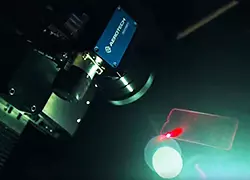
A case study examining display production that optimizes quality and throughput – and lower total cost.
2 min read
In the realm of precision manufacturing, the choice of laser technology can significantly impact both operational efficiency and product quality. Because fiber lasers and CO₂ lasers bring unique benefits to the table, decision makers must understand these differences to optimize their laser processing automation systems. This article explores the fundamental distinctions between these technologies, delves into their unique benefits and provides insights into their applications in modern manufacturing.
Fiber lasers and CO₂ lasers are both integral to modern manufacturing, yet they operate on distinct principles.
Fiber Lasers: These use a solid-state medium—specifically, optical fibers doped with rare-earth elements. The light generated is amplified through the fiber, allowing for efficient energy transfer.
CO₂ Lasers: In contrast, CO₂ lasers are gas lasers that produce light by exciting a mixture of carbon dioxide, nitrogen and helium.
Operating Principle: Solid-state (fiber) vs. gas (CO₂).
Wavelength: Fiber lasers typically operate at a wavelength of 1.06 micrometers, while CO₂ lasers operate at 10.6 micrometers.
Efficiency: Fiber lasers are generally more efficient, converting up to 30% of electrical energy into laser light, while CO₂ lasers convert around 10%.
These characteristics set fiber lasers apart, making them suitable for a wide range of applications where precision is paramount.
Fiber lasers offer several compelling advantages over traditional laser technologies, particularly in terms of efficiency and versatility.
Efficiency and Speed: Fiber lasers provide faster processing speeds due to their high beam quality and power density. This results in shorter cycle times and increased throughput.
Additionally, incorporating precision motion control systems can further enhance the performance of fiber lasers. For instance, integrating advanced motion controllers can facilitate deterministic high-speed positioning, ensuring that laser operations are executed with sub-micron accuracy. This level of precision is critical in applications requiring tight tolerances.
By leveraging these benefits, manufacturers can enhance productivity while reducing downtime and maintenance expenses.
Fiber lasers are particularly advantageous in several industries and applications:
Automotive: Used for cutting and welding components with high precision.
Aerospace: Ideal for processing lightweight materials such as aluminum and titanium.
Medical Devices: Employed in the manufacturing of intricate parts with stringent quality requirements.
Fiber lasers can effectively process:
Metals (steel, aluminum, copper)
Plastics
Ceramics
The ability to achieve sub-micron level precision in these applications is further supported by the integration of custom design and engineering solutions, allowing for tailored setups that meet specific manufacturing needs. Successful implementations in manufacturing have demonstrated the versatility and efficiency of industrial fiber laser systems, reinforcing their role as a cornerstone of modern production lines.
Understanding operational costs is vital for any manufacturing decision. The cost factors associated with operating a fiber laser include:
Energy Consumption: Fiber lasers are more energy-efficient, leading to lower electricity costs.
Maintenance: Reduced maintenance needs translate to lower overall costs.
Material Costs: The ability to process a wider range of materials can affect overall expenditure.
When comparing fiber laser vs CO₂ laser cost, fiber lasers typically result in lower operational costs due to their efficiency and reduced maintenance requirements.
In conclusion, choosing a fiber laser over a CO₂ laser can significantly enhance your manufacturing capabilities. With their efficiency, versatility and cost-effectiveness, fiber lasers are often the superior choice for modern production environments.
Ready to dive deeper into the world of laser processing automation?
