What are the advantages of choosing a fiber laser over a CO₂ laser for my specific applications?
Discover the benefits of fiber lasers over CO2 lasers for your specific applications. Learn why fiber lasers may be the better choice.

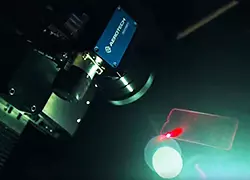
A case study examining display production that optimizes quality and throughput – and lower total cost.
2 min read
In the realm of precision manufacturing and laser processing automation systems, the differences between laser machining techniques can significantly influence production outcomes. Femtosecond laser micromachining has emerged as a revolutionary method, offering unparalleled applications and capabilities. This article will provide a comprehensive comparison of femtosecond lasers and traditional methods.
Femtosecond lasers are a class of laser technology that emits pulses of light lasting just a few femtoseconds (10^-15 seconds). This ultra-short pulse duration enables unique operational principles, allowing for extremely high peak powers and precise energy delivery to materials.
High Peak Power: The short pulse duration enables peak powers in the gigawatt range, which can effectively ablate materials without significant heat diffusion.
Precision: The ability to control the energy input allows for sub-micron and nanometer-scale machining, setting femtosecond lasers apart from traditional laser technologies.
These characteristics make femtosecond lasers ideal for applications requiring extreme precision, such as microelectronics and biomedical device manufacturing. Additionally, the integration of precision motion control systems enhances the accuracy of femtosecond laser micromachining, ensuring that the laser's focus remains exact throughout the machining process.
The advantages of femtosecond laser micromachining over traditional laser technologies are profound, particularly in terms of precision and material integrity.
Precision and Accuracy: Femtosecond lasers can achieve machining tolerances at the sub-micron level, making them suitable for intricate designs and features.
Reduced Thermal Effects: Unlike traditional laser machining, which can cause thermal damage to surrounding materials, femtosecond lasers minimize heat-affected zones. This results in cleaner cuts and better material properties post-processing.
These advantages are crucial for industries where material integrity and precision are paramount, such as in the manufacturing of optical components and micro-electromechanical systems (MEMS).
Femtosecond laser micromachining is highly versatile, allowing for the processing of varied materials. The choice of material significantly influences the effectiveness of the laser technology.
Commonly Used Materials
Metals: Copper, aluminum and titanium are often machined for their high thermal conductivity and strength.
Semiconductors: Silicon and gallium arsenide are ideal for electronic applications due to their electronic properties.
Polymers: Femtosecond lasers can achieve clean cuts in polymers without the thermal degradation that traditional methods might cause.
The material properties, such as thermal conductivity and absorption coefficients, dictate the suitability of femtosecond laser micromachining for specific applications. Our custom design and turnkey automation capabilities further enhance the adaptability of femtosecond laser micromachining across various materials, reducing both technical and business risk in production.
A side-by-side comparison between femtosecond and traditional laser machining highlights significant differences in performance and application suitability.
Comparison Overview
Precision: Femtosecond lasers enable sub-micron and nanometer accuracy, while traditional methods are limited to micron accuracy.
Thermal Effects: Femtosecond lasers cause minimal thermal damage, while traditional methods have significant thermal impact.
Material Versatility: Femtosecond lasers work with a wide range of metals and polymers, while traditional methods are used primarily with metals and ceramics.
Application Areas: Femtosecond lasers are often used for microelectronics and biomedical applications, while traditional methods are typically suited for general machining and cutting.
Microelectronics: For creating intricate circuit patterns.
Biomedical Devices: In applications requiring precision cuts without damaging sensitive materials.
The unique advantages of femtosecond laser micromachining make it a superior choice for high-tech manufacturing sectors focused on precision and innovation. Leveraging ISO Class 5/6 cleanroom manufacturing capabilities allows the machining processes to maintain the highest standards of cleanliness and precision, further enhancing the final products’ quality.
Ready to dive deeper into the world of laser processing automation?
